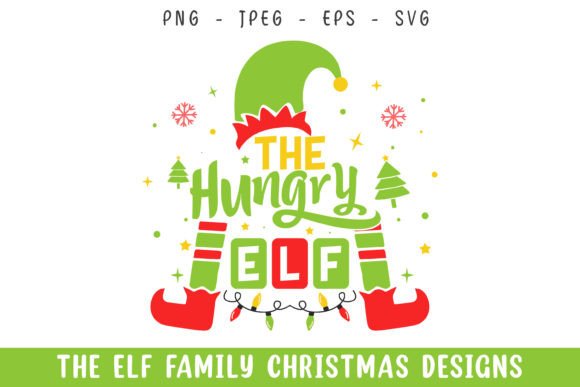
The Hungry Elf Merry Christmas Designs
A Designer’s First Stitch: Warm, Whimsical, and Ready for Real Life
As someone who’s stitched hundreds of holiday designs—from delicate snowflakes to intricate Santa portraits—I opened The Hungry Elf Merry Christmas Designs expecting charm. What I found was something more useful: personality with purpose. This isn’t just another jolly elf silhouette. It’s a cohesive, expressive motif that leans into playful storytelling—slightly mischievous eyes, a tiny cookie in hand, a soft curve to the posture that reads as cozy, not chaotic. That warmth translates directly to real-world projects: think embroidered baby onesies for a “First Christmas” keepsake, or a cheerful tote bag for a boutique stocking stuffer.
Where It Shines: From Sweatshirt Embroidery to Holiday Gift Appeal
I tested The Hungry Elf Merry Christmas Designs across three actual product types: a medium-weight cotton apron, a 100% cotton unisex sweatshirt, and a linen tea towel. On the apron, the design held crispness in the satin-stitched hat brim and clean fill-stitched body—no puckering, even with moderate stitch density. On the sweatshirt, it read clearly at 4.5 inches wide: friendly enough for kids’ wear, detailed enough for adult gifting. And on the tea towel? The simplified outline and open negative space kept it from looking muddy after repeated washes—a win for kitchen-focused handmade products.
For Etsy sellers and small shop owners, this matters: The Hungry Elf Merry Christmas Designs supports quick turnaround without sacrificing perceived value. It works equally well as a standalone embroidery file on a baby cap or layered into a larger holiday-themed patch set. Its visual rhythm—balanced weight, intentional spacing, and clear focal point—makes it easy to pair with simple text (“Our First Christmas,” “Elf Approved”) without overcrowding.
Where to Pause: Texture, Scale, and Fabric Realities
Not every surface is forgiving—and The Hungry Elf Merry Christmas Designs reveals its limits honestly. On thin, stretchy jersey (like a lightweight holiday T-shirt), I noticed slight distortion around the elf’s curved arms unless I used cutaway stabilizer and reduced tension. On textured fabrics—think terry cloth towels or bouclé knit blankets—the finer details (like the stitching on the elf’s boots) softened noticeably. That’s not a flaw; it’s a cue. This design thrives where clarity matters most: smooth cotton, twill, felt, or stable blends.
Also worth noting: while the bundle promises easy color changes for dark or white tees and mugs, remember that embroidery doesn’t “change color” like digital art—it requires manual thread swaps and careful planning. If you’re using it for custom apparel, test your thread palette against fabric first. A warm cocoa brown thread on charcoal fleece reads richer than black; a pale mint on ivory linen feels softer than stark white.
Practical Notes Every Embroidery Designer Should Check
- Test before committing: Run a sample on scrap fabric matching your final product’s weight and weave—not just plain muslin.
- Stabilizer isn’t optional: Medium-weight cutaway works best for knits and bags; tear-away suffices for stable wovens like tea towels or pillow covers.
- Watch the corners: The elf’s pointed hat and boot tips are tight curves. On small hoop sizes (under 4 inches), consider simplifying or adjusting pull compensation in your software.
- Mock it both ways: View your digital embroidery file in black-and-white mockups to assess contrast and legibility—especially if selling online where color accuracy varies.
- Licensing clarity is non-negotiable: Since this is listed as a Graphics bundle with commercial use implied, verify whether resale of finished embroidered items (e.g., on Etsy) is permitted—and whether attribution is required.
Why Customers Reach for This Design—Beyond the Holiday Season
Here’s what surprised me: people didn’t just smile at the elf—they *recognized* it. Not as a trope, but as a character. That emotional shorthand builds trust fast. A customer buying an embroidered pillow cover with The Hungry Elf Merry Christmas Designs isn’t just choosing decor; they’re choosing a mood—playful, nostalgic, gently humorous. That resonance lifts perceived value, especially for personalized gifts and boutique branding.
For craft businesses, that means less explaining and more connecting. You can feature it in a printable mockup alongside warm lighting and rustic props—and buyers instantly understand the vibe. No need for heavy copy. The design carries its own narrative weight.
Final Thought: A Reliable, Human-Scale Design Asset
The Hungry Elf Merry Christmas Designs won’t replace your heirloom monogram collection—but it fills a very real gap in the Crafts and Graphics landscape: approachable, commercially viable, and emotionally resonant holiday embroidery. It’s built for makers who value both craftsmanship and connection. Whether you’re prepping for craft fair season, launching a holiday capsule collection, or simply stitching joy into everyday objects, this design earns its place in your library—not because it’s flashy, but because it’s thoughtful, adaptable, and quietly confident in its charm.