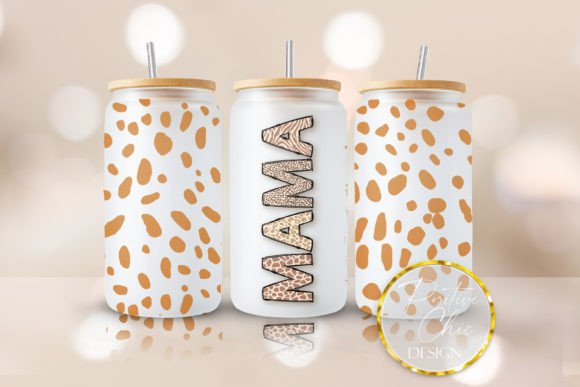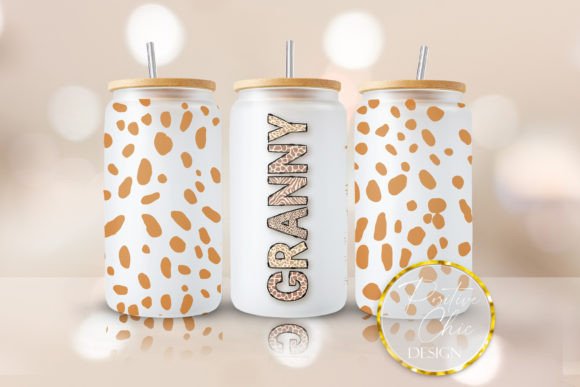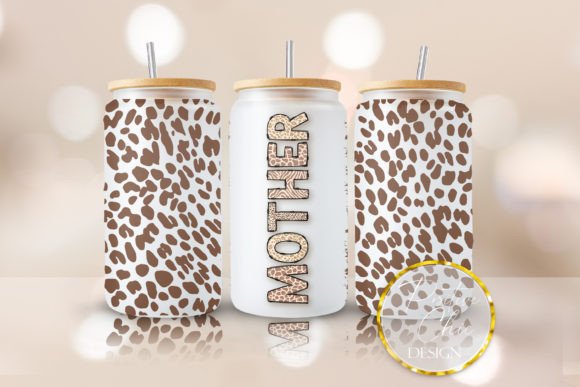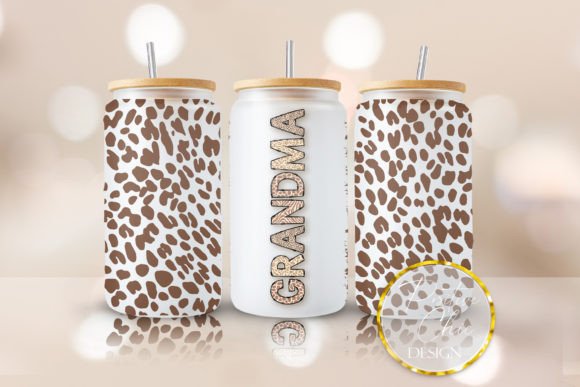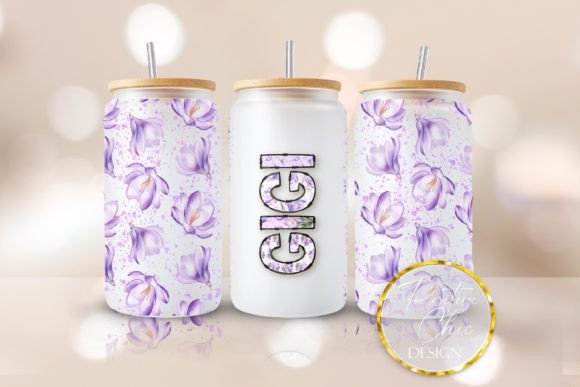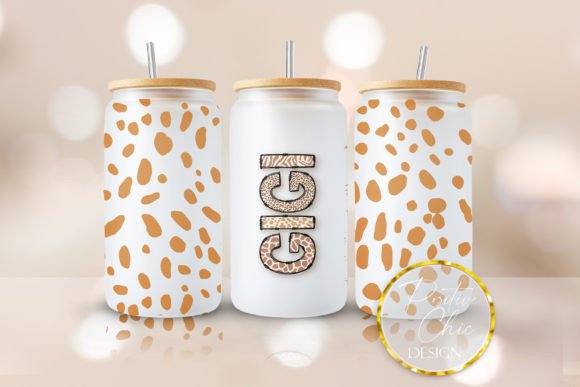
Gigi Animal Print Libbey Can Glass Wrap
First Impressions: Bold, Playful—and Surprisingly Versatile
When I opened the Gigi Animal Print Libbey Can Glass Wrap file, I wasn’t expecting much beyond a trendy sublimation wrap for tumblers—but what stood out immediately was its confident rhythm. The animal print isn’t chaotic or overly dense; it’s balanced with intentional negative space, subtle tonal shifts, and a repeat structure that feels designed for scale—not just screen display. As an embroidery designer who regularly adapts graphics for stitch, I appreciated how the motif avoids micro-detailing: no tiny eyes, no feathered edges, no overlapping fur strands that would vanish under satin stitch. It reads clearly at 3”–5”, which means it translates well to tote bag corners, sweatshirt chest placements, or even baby onesie hems.
A Real Project Moment: Stitching It on a Linen-Cotton Tea Towel
Last week, I used Gigi Animal Print Libbey Can Glass Wrap as the central motif on a set of kitchen tea towels for a local boutique launch. I resized it to 4.2” wide, digitized a clean fill-stitch version (no applique), and paired it with a simple running-stitch border. The result? A handmade product that felt elevated—not busy, not juvenile, but quietly confident. Customers responded to its texture contrast: the soft linen background against the crisp, rhythmic animal print. That tells me this design works best when it’s *anchoring*, not overwhelming—a focal point that invites touch and recognition without shouting.
Where It Shines in Embroidery Projects
- Custom apparel: Works beautifully on midweight cotton sweatshirts and structured canvas tote bags—fabric stability helps hold the print’s shape during stitching.
- Baby embroidery: Softened with lighter stitch density and matte thread, it reads sweet rather than loud on organic cotton onesies or burp cloths.
- Embroidered patch: Clean outlines and consistent line weight make it ideal for heat-seal or sew-on patches—no detail loss at 2.5” size.
- Holiday & gift embroidery: Paired with neutral thread (stone, charcoal, oat) on ivory linen, it becomes a sophisticated holiday hostess gift—far from cliché.
- Craft business & Etsy listings: Because it’s rooted in a recognizable aesthetic (animal print + modern minimalism), it supports cohesive branding across digital embroidery files, printable mockups, and physical finished products.
Where to Proceed Thoughtfully
Gigi Animal Print Libbey Can Glass Wrap is strong—but not universal. It demands intentionality in execution. Avoid using it full-size on stretchy knits like jersey t-shirts unless you’re stabilizing aggressively and reducing stitch density. On dark fabric, test thread contrast first: some animal print tones recede if your top thread lacks saturation. And while it’s forgiving on flat surfaces (towels, pillow covers), skip curved applications like cap fronts unless you simplify the repeat into a single framed motif—embroidery machines struggle with seamless wraps on rounded substrates.
Design Assets That Support Your Craft Business
This isn’t just a graphic—it’s a design asset with commercial legs. As a digital embroidery file, its clean vector-like edges mean sharp digitization. Its repeat-friendly layout lets you create coordinating borders, monogram frames, or even scaled-down corner accents for nursery decor. For Etsy sellers bundling machine embroidery designs, pairing Gigi Animal Print Libbey Can Glass Wrap with coordinating solid-thread palettes or seasonal color guides adds real value. Just remember: because it’s labeled as a sublimation PNG, confirm licensing terms before reselling stitched versions or bundling with other digital embroidery files.
Practical Notes Every Embroidery Designer Should Check
- Test the design on scrap fabric matching your final substrate—linen behaves differently than cotton twill, and stitch density shifts accordingly.
- Review thread color contrast on both light and dark backgrounds; animal prints can mute if adjacent tones are too close in value.
- Confirm hoop size compatibility—this design scales well, but avoid cramming it into a 3” hoop without simplifying detail.
- Inspect small corners and inner curves: sublimation files sometimes include thin connecting lines that don’t digitize cleanly—clean those manually before stitching.
- Try a black-and-white mockup first. If the pattern loses legibility without color, adjust fill stitch spacing or add subtle outline reinforcement.
- Use cutaway stabilizer for structured items (tote bags, aprons); tear-away works fine for tea towels or baby items.
- Verify commercial use rights—especially if selling finished embroidered products or offering this as part of a digital embroidery bundle.
Why This Feels Like a Keeper for Makers
Gigi Animal Print Libbey Can Glass Wrap doesn’t try to be everything. It’s not a floral bouquet, a script monogram, or a cartoon mascot. It’s a mood—confident, tactile, quietly luxe—and that makes it unusually adaptable across Crafts and Graphics contexts. Whether you’re designing a boutique’s signature apron line, prepping holiday embroidery kits for craft fairs, or building a library of digital embroidery files for Etsy, this design holds up. It elevates the handmade product without demanding perfection from the maker. And in a market flooded with over-digitized, over-complicated motifs, that kind of clarity is rare—and valuable.