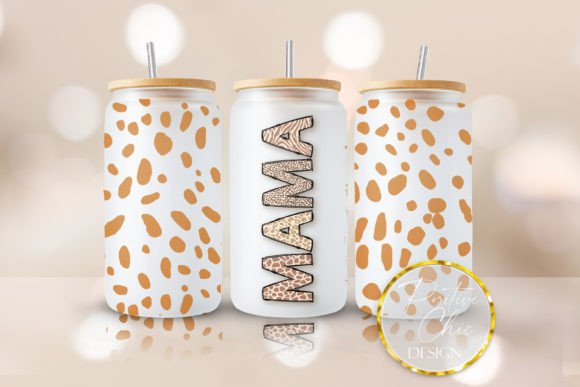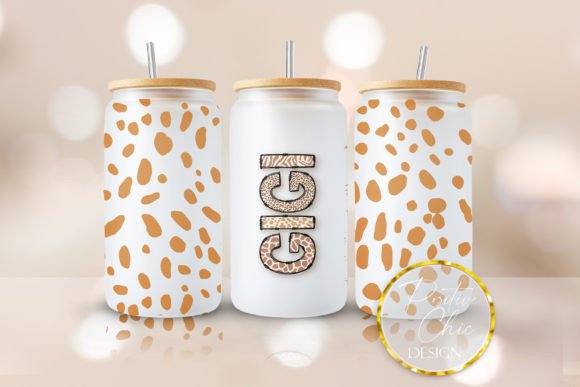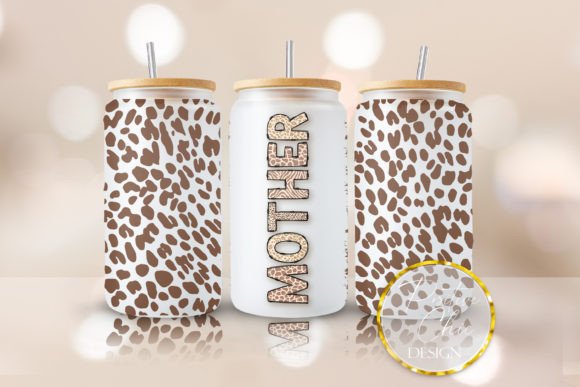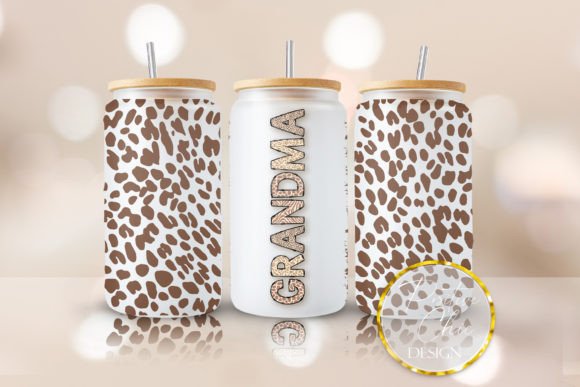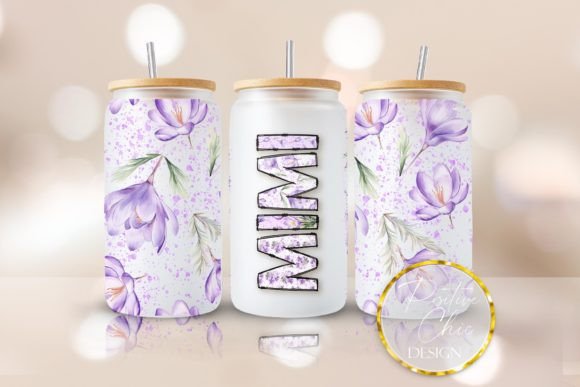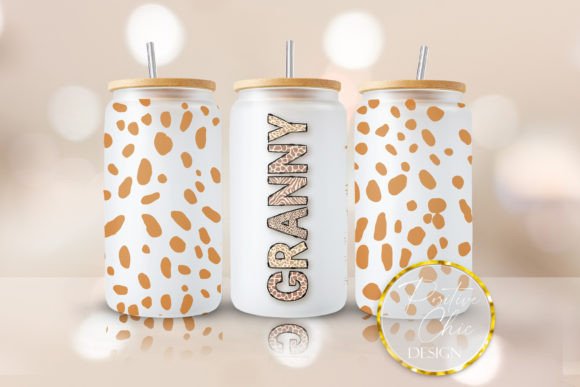
Mimi Animal Print Libbey Glass Can Wrap
First Impressions: Bold, Playful—and Surprisingly Versatile
When I opened the Mimi Animal Print Libbey Glass Can Wrap, my first thought wasn’t “sublimation tumbler wrap”—it was “this would stitch beautifully on a linen tea towel.” The design carries that rare balance: high-contrast animal print energy with clean, intentional negative space. It’s not chaotic—it breathes. The motif wraps fluidly around the central axis, suggesting movement without visual clutter. As an embroidery designer who tests dozens of graphics weekly, I appreciate how its rhythm translates across surfaces: the curves soften on knit fabric, sharpen on twill, and gain tactile depth when stitched in matte cotton thread.
A Real Project Moment: Stitching It for a Boutique Baby Gift Set
Last week, I used Mimi Animal Print Libbey Glass Can Wrap as inspiration—not as-is—for a custom baby gift set: organic cotton burp cloths, a matching muslin swaddle, and a lightweight cotton apron for new parents. I resized and simplified key elements (the leopard-spot cluster near the base, the subtle stripe accent) into a 3.2” x 4.5” machine embroidery design. Why? Because the original graphic’s confidence works *because* it’s bold—but embroidery demands restraint. What reads as lively on a glossy tumbler can read as muddy in satin stitch on thin fabric. So I kept the core personality—playful, warm, gender-neutral—and let the stitch execution carry the charm.
Where It Shines in Embroidery Projects
- Tote bag design: Works best centered on medium-weight canvas or denim—stitch density holds up, and the print’s scale reads clearly even at arm’s length.
- Sweatshirt embroidery: Ideal for left-chest placement on midweight fleece; avoid full-back unless you’re using a large hoop and low-density fill stitch.
- Embroidered patch: Traces cleanly with clean edge definition—perfect for iron-on backing or sew-on applique design applications.
- Holiday embroidery: Paired with gold metallic thread on navy velvet, it becomes unexpectedly luxe—great for boutique holiday gifts or small shop product lines.
- Personalized gift: Layered subtly behind a monogram (e.g., a child’s initial in script) adds narrative without overwhelming.
Where to Proceed Thoughtfully
The Mimi Animal Print Libbey Glass Can Wrap isn’t built for every surface—and that’s okay. Its strength lies in intentionality, not universality. Use caution with:
- Small hoop sizes (under 4”): Some interior details compress poorly—test the smallest repeat unit first.
- Stretchy fabric: The linear flow of the pattern can distort on jersey or rib knits unless stabilized with cutaway + tear-away combo.
- Dark fabric: The original sublimation palette leans warm; verify thread color contrast—especially in the cream-toned spots—before stitching on charcoal or navy.
- Curved surfaces like caps: Avoid direct transfer—the wrap layout assumes flat, cylindrical symmetry. Redraw key motifs for front-panel cap placement instead.
- Frequent-wash items (baby clothes, kitchen towels): Opt for dense satin stitch over open fill stitch in high-friction zones to preserve clarity over time.
Design Integrity Meets Customer Trust
As an Etsy seller and craft business owner, I’ve learned customers don’t just buy a design—they buy the promise of quality execution. When I use Mimi Animal Print Libbey Glass Can Wrap in a finished product, buyers notice the cohesion: the rhythm of the print echoes in my packaging, my mockups, even my product photography style. That consistency builds trust. It tells them, “This wasn’t slapped on—it was chosen, adapted, and honored.” And because the graphic sits firmly in the Crafts and Graphics category—not mass-market clipart—it feels special, ownable, and handmade in spirit, even before a single needle drops.
Practical Designer Notes You’ll Actually Use
- Always test on scrap fabric first—especially if pairing with textured weaves or slub yarns.
- Check thread color contrast on both light and dark backgrounds using simple black-and-white mockups.
- Review stitch density in your embroidery software: look for areas where fill stitches might bleed or pucker on lightweight cotton.
- Confirm hoop size compatibility before digitizing—you’ll want at least a 5” x 7” hoop for faithful reproduction.
- Inspect small details at 200% zoom: those fine stripes and spot outlines need crisp vector integrity to translate cleanly.
- Use proper stabilizer: medium-weight cutaway for stable fabrics; lightweight tear-away for linens and quilting cotton.
- Verify licensing before selling finished embroidered items or bundling the digital embroidery file—UVDTF designs are often for personal and small-batch commercial use, but always confirm.
Final Thought: It’s Not Just a Graphic—It’s a Design Partner
I don’t reach for Mimi Animal Print Libbey Glass Can Wrap when I need filler. I reach for it when I want warmth with wit, structure with spontaneity, and a starting point that respects both the craft and the customer. Whether it becomes a standout embroidered patch for a local coffee shop’s staff aprons—or anchors a line of personalized nursery decor—it earns its place by performing quietly, consistently, and with unmistakable character. For embroidery designers, small shop owners, and creative entrepreneurs who value substance over sparkle, this is one of those rare digital embroidery files that feels less like stock and more like collaboration.