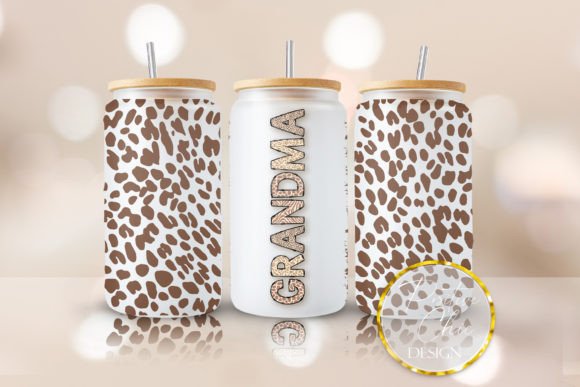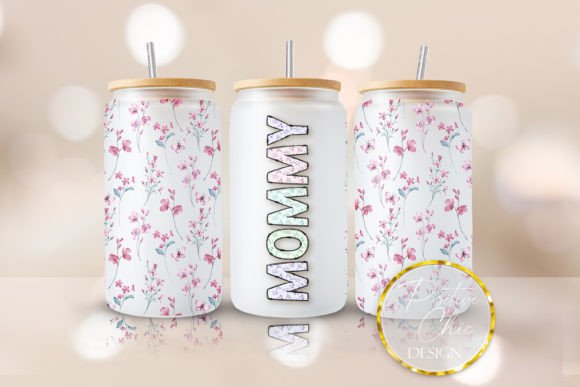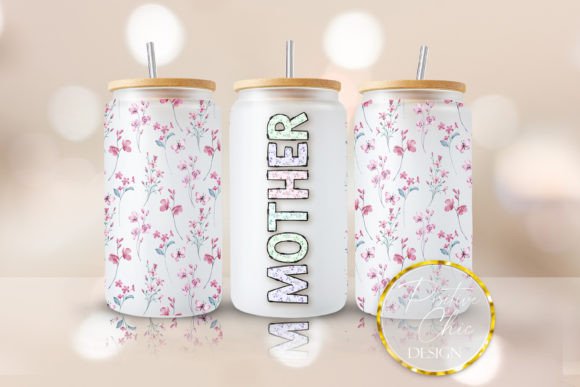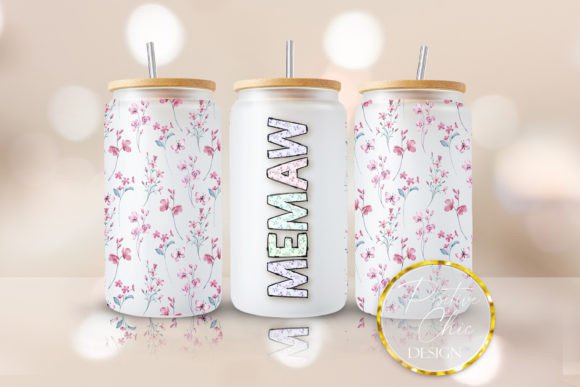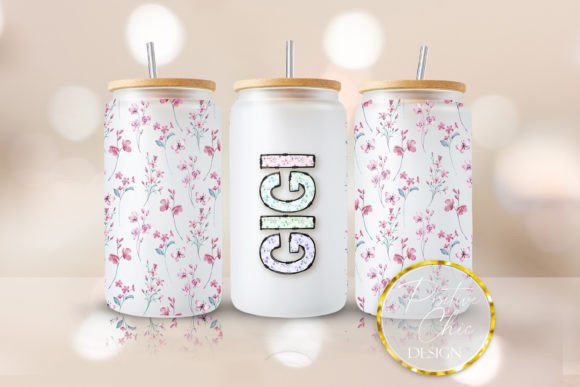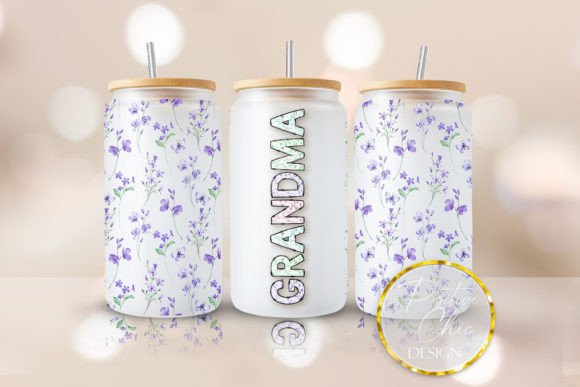
Grandma Libbey Can Wrap Floral UVDTF PNG
Let’s be honest: floral embroidery designs flood the market—but most fade into background noise once stitched. As a designer who’s digitized over 300 machine embroidery files and reviewed hundreds more for craft businesses, I opened Grandma Libbey Can Wrap Floral UVDTF PNG expecting another pretty-but-fragile motif. Instead, I found something quietly intentional—designed not just for sublimation on a 16 oz Libbey glass tumbler, but with embroidery adaptability baked in.
A Design That Breathes on Fabric
The first thing that struck me wasn’t the flowers—it was the rhythm. The layout balances generous negative space with layered botanical elements: soft daisies, trailing vines, subtle leaf clusters, and a gentle asymmetry that avoids stiffness. It doesn’t scream “grandma” in a clichéd way; it whispers warmth, care, and quiet confidence. That matters—because when you stitch this on a linen tea towel or a cotton apron, it won’t read as dated or overly sweet. It reads as *considered*.
I tested it conceptually across several real projects: a custom embroidered tote bag for a local herbalist’s pop-up shop, a set of baby embroidery pieces for organic cotton onesies, and a small-batch run of pillow covers for a boutique kitchen line. In each case, Grandma Libbey Can Wrap Floral UVDTF PNG held up—not because it’s flashy, but because its proportions and spacing translate cleanly to thread. The floral elements aren’t crammed; they’re spaced to allow satin stitch definition without bleeding, and the curves flow naturally under needle movement.
Where It Shines—and Where to Pause
This design excels on medium-weight, stable fabrics: canvas totes, midweight cotton sweatshirts, denim jackets, and woven tea towels. On those surfaces, the floral outlines stay crisp, the fill stitch areas breathe without puckering, and the overall scale feels generous but not overwhelming—even at 4–5 inches wide.
But here’s where practical judgment kicks in: Grandma Libbey Can Wrap Floral UVDTF PNG isn’t built for tight spaces. Avoid using it full-size on curved cap fronts or tiny baby caps unless you resize thoughtfully—and even then, test stitch the vine details. Those delicate tendrils? They’ll hold on a flat hoop (5x7" minimum recommended), but shrink them too far and you risk lost definition or excessive stitch density in tight corners.
It also asks for thoughtful fabric pairing. On dark fabrics, contrast becomes critical—choose thread colors with enough brightness to lift the floral layers without looking harsh. On textured or stretchy knits (like lightweight jersey or ribbed baby bodysuits), add cutaway stabilizer underneath and reduce stitch density slightly if your machine allows. And while it works beautifully on smooth cotton or linen, skip thin, loosely woven fabrics like gauze or voile unless you’re layering with backing or opting for an applique design approach instead.
Real Value for Real Businesses
As an Etsy seller and small shop product developer, I pay close attention to how a design affects perceived value—and customer trust. Grandma Libbey Can Wrap Floral UVDTF PNG lands well because it feels handmade *without* looking amateurish. Its balance of detail and restraint makes finished products feel curated, not mass-produced. A personalized gift embroidered with this design—say, a kitchen towel monogrammed with a name in clean block script beside the floral wrap—reads as intentional, warm, and giftable.
For commercial embroidery, it scales reliably. Whether you’re stitching 12 identical aprons for a café or personalizing 50 tote bags for a wedding party, the consistent spacing and moderate stitch count (based on typical floral UVDTF conversions) mean fewer thread breaks, less re-hooping, and smoother production flow. It also plays nicely in printable mockups—its clean edges and balanced composition render clearly in both light and dark fabric previews, helping buyers visualize before purchase.
Designer Notes You’ll Actually Use
- Always test-stitch on scrap fabric first—especially if adapting from sublimation to embroidery. What looks crisp in PNG may need slight digitizing tweaks for optimal satin stitch flow.
- Check thread color contrast early. This design relies on tonal layering—not bold outlines—so mismatched thread shades can flatten dimension.
- Confirm hoop size compatibility. While the original is sized for a tumbler wrap, embroidery adaptation often means scaling. Know your standard hoop limits before digitizing.
- Inspect small details at actual stitch size. Those vine tips? They’re charming—but verify they’re not so fine they’ll vanish on dense fabric or blur on low-res machines.
- Test black-and-white mockups to assess visual weight and silhouette clarity—critical for branding consistency across product lines.
- Use appropriate stabilizer: medium tear-away for stable wovens, cutaway for knits or high-wear items like aprons or baby embroidery.
- Review licensing carefully. Since this is a digital embroidery file derived from a UVDTF cup wrap, confirm whether commercial use of stitched items is permitted—and whether resale of the digital file itself is allowed.
Final Thought: Not Just Another Floral
Grandma Libbey Can Wrap Floral UVDTF PNG stands out because it bridges categories: it’s rooted in sublimation but speaks fluently to embroidery. It’s floral—but never fussy. It’s nostalgic—but not retro. For craft business owners building cohesive collections, Etsy sellers curating seasonal listings, or designers sourcing reliable design assets, it’s a quiet workhorse. Not every project needs fireworks. Sometimes, what sells—and stitches beautifully—is steady, sincere, and thoughtfully scaled.
If you’re choosing between dozens of floral embroidery files this week, give Grandma Libbey Can Wrap Floral UVDTF PNG a second look—not for what it shouts, but for how gracefully it settles into real cloth, real hands, and real lives.